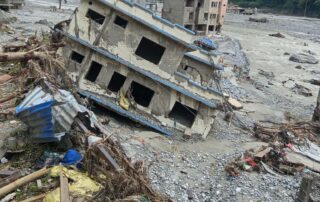
A devastating flash flood has caused severe damage along the Bhotekoshi and Trishuli rivers. On the morning of August 26th the flood wave struck the mountainous region near the border with Tibet. The Rasuwa and Nuwakot districts have been particularly badly hit. Severe flooding and landslides have also been reported in Dhading and Chitwan.
Entire communities were hit by water, mud, and debris. Houses, roads, and bridges were destroyed or severely damaged, as were hydroelectric power plants and other critical infrastructure.
Another flash flood worsens the situation in Nepal
On October 11th another severe flash flood struck the Gorkha District. A landslide had temporarily dammed the Budhi Gandaki River. As the water broke through, it swept away houses and bridges and damaged a hydroelectric power plant construction site. Five people were initially reported missing, and 49 people were rescued. The authorities issued warnings to other communities downstream and ordered evacuations. The United Nations is assisting the authorities in assessing the damage and coordinating emergency relief efforts.
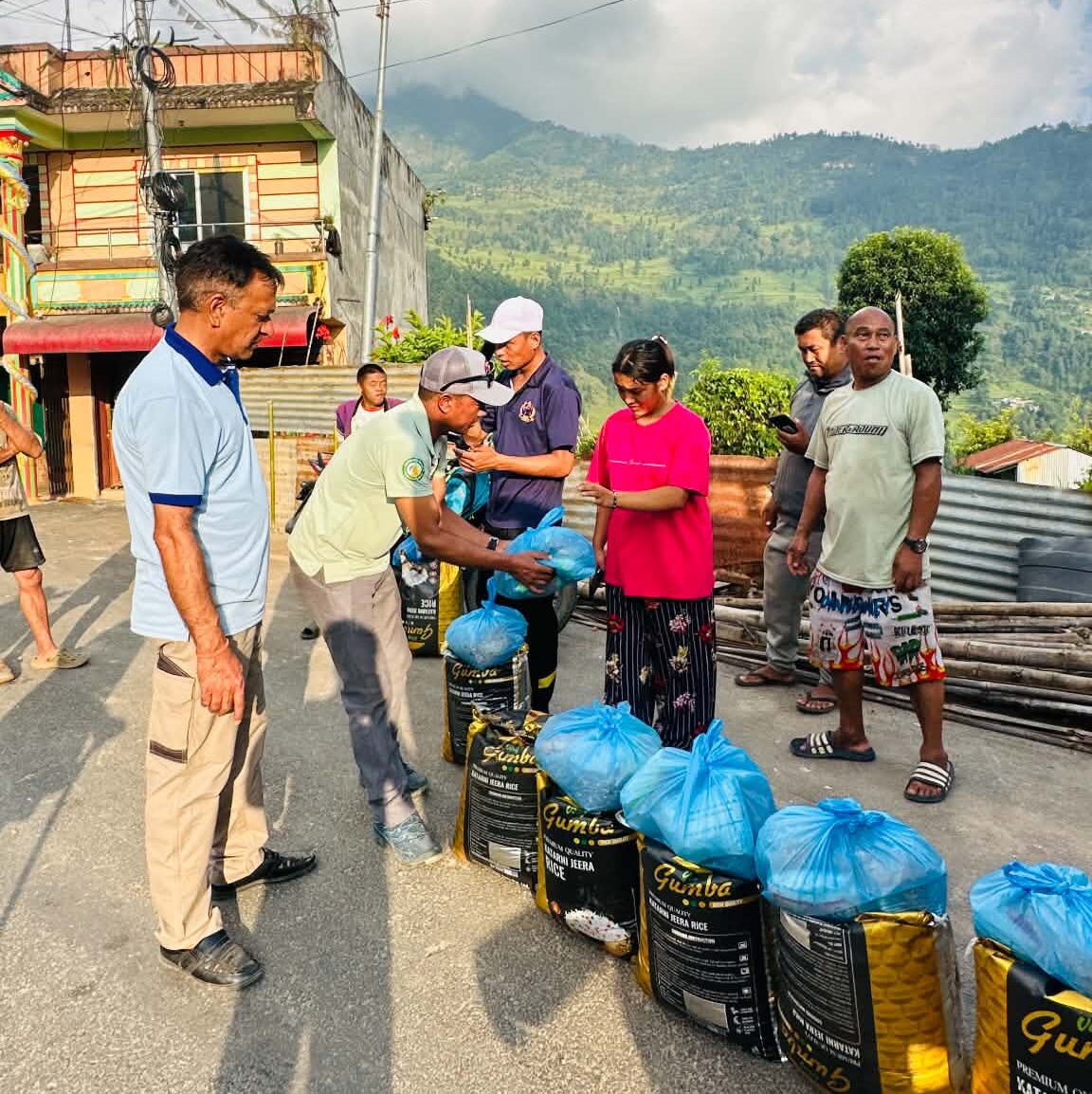
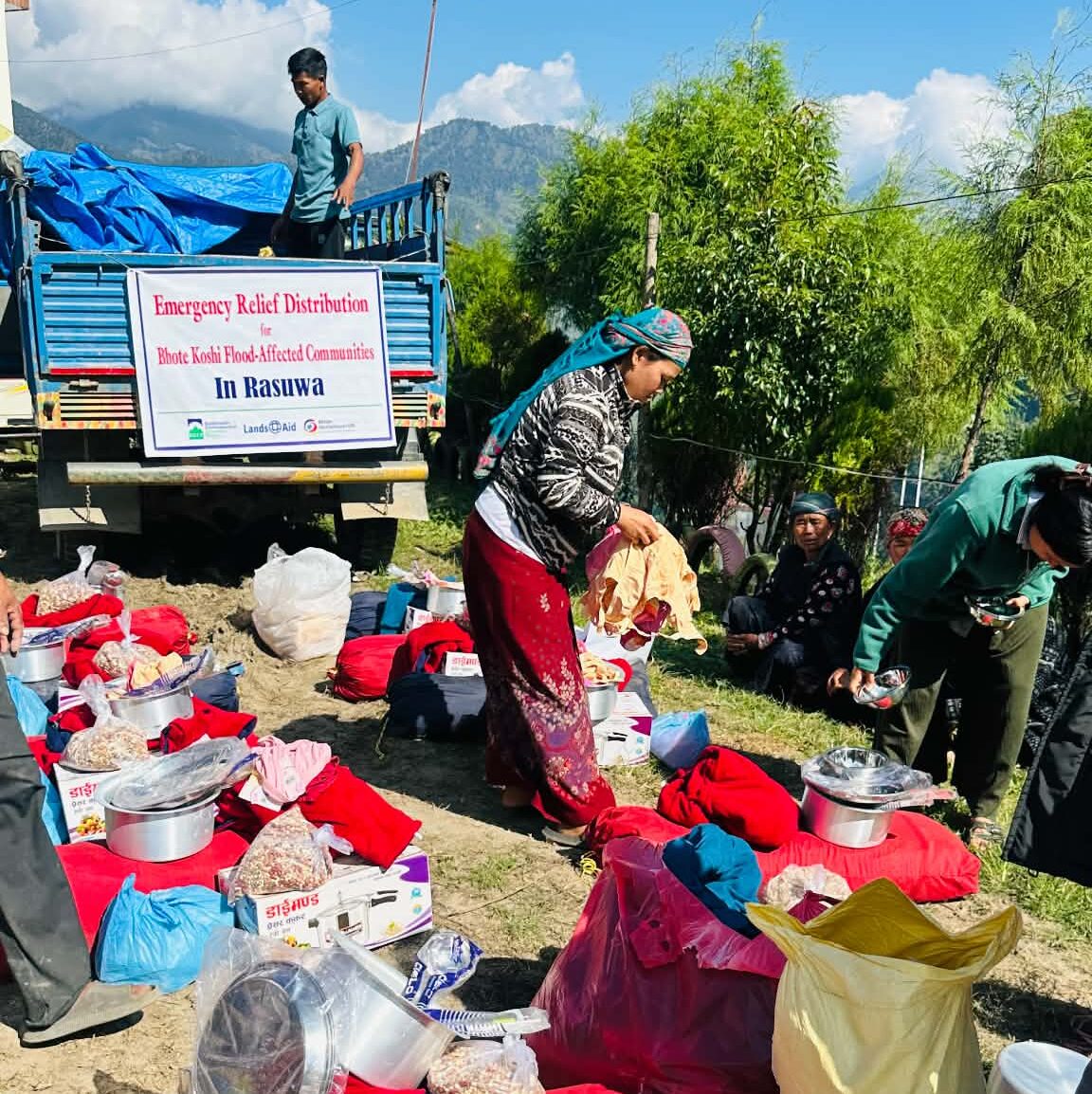
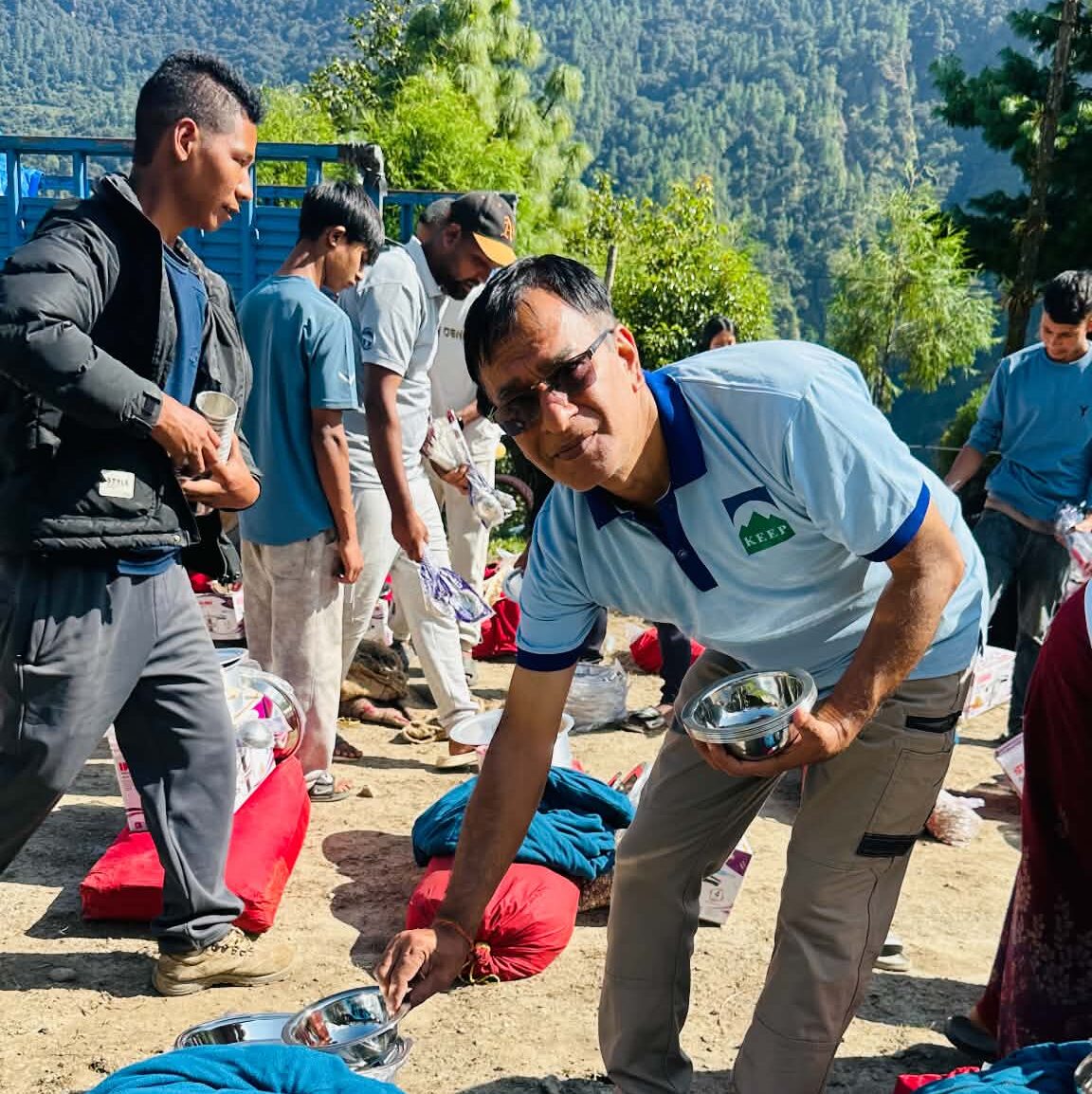
Our aid project in the Rasuwa District has not been affected by this latest flash flood. We are continuing to provide support to the families affected by the August floods in collaboration with our local partner organization, KEEP.
Why Nepal Is Particularly Vulnerable
Due to its geographic location and climatic conditions, Nepal is particularly vulnerable to flooding and landslides. In the Himalayas, steep mountain slopes, unstable soil, and river valleys converge. During the monsoon, heavy rains can release large volumes of water in a short period of time and cause slopes to slide. Added to this are the consequences of global warming: Rising temperatures are altering glaciers and increasing the risk of glacial lake outbursts in certain regions. When landslides block rivers and the water suddenly breaks through, dangerous flood waves result. Recent events highlight the importance of reliable early-warning systems, disaster preparedness, and resilient infrastructure.
LandsAid in Nepal
LandsAid has had ties to Nepal for many years. We were already active in the country providing emergency relief following the devastating earthquake in 2015 and the floods in 2017.
With our current support, we are building on this earlier commitment. The focus is on providing needs-based assistance that is implemented in collaboration with local organizations and reaches those who have been particularly hard hit.
Kathmandu Environmental Education Project (KEEP)
For the current emergency relief efforts, we are partnering with the Kathmandu Environmental Education Project (KEEP). This Nepalese organization has been active in rural community development for many years and knows the affected region very well through its work in sustainable tourism.
Among other things, KEEP has an extensive network of guides in the Syabrubesi–Langtang corridor and is therefore closely connected to local communities.