Sustainability goals become concrete projects

LandsAid provides insights into its project work at the “Global Engagement Network Meeting” at the Landsberg am Lech District Administrator`s Office

From UN Goals to Concrete Project Work
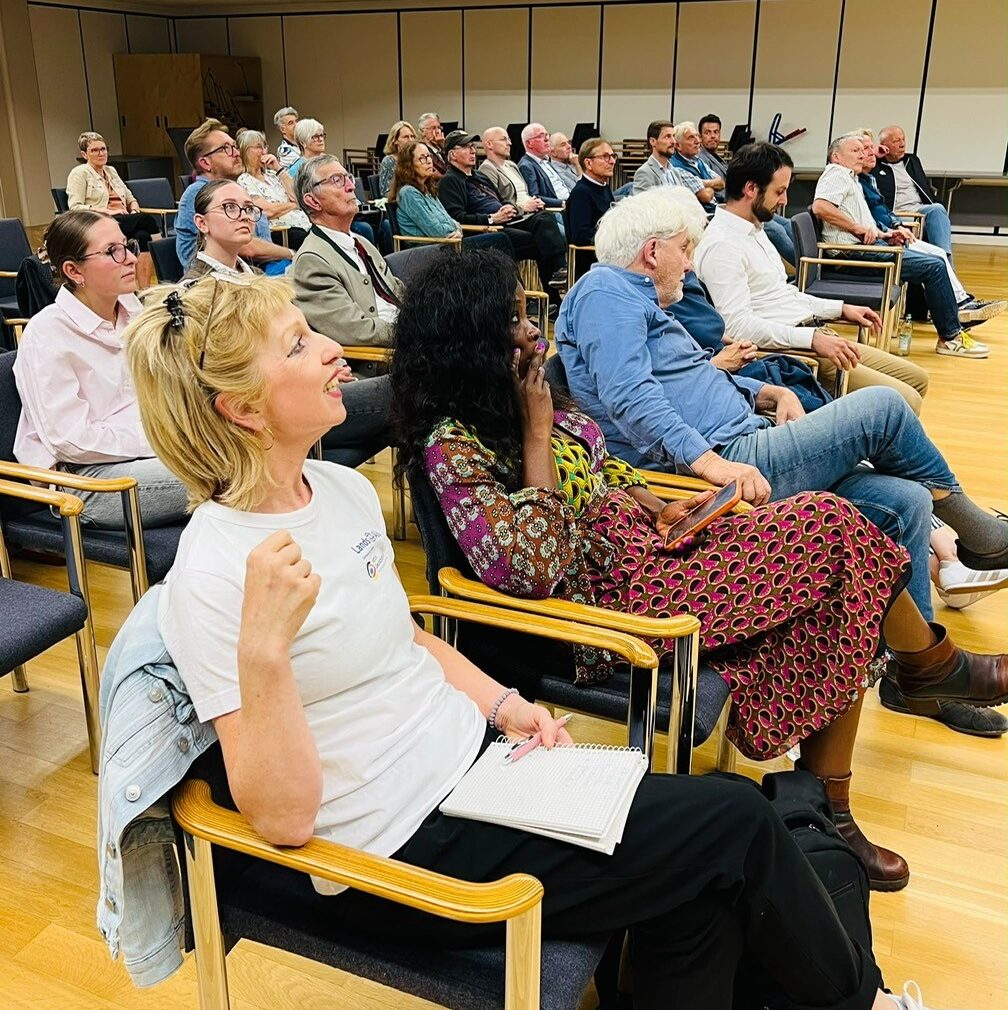
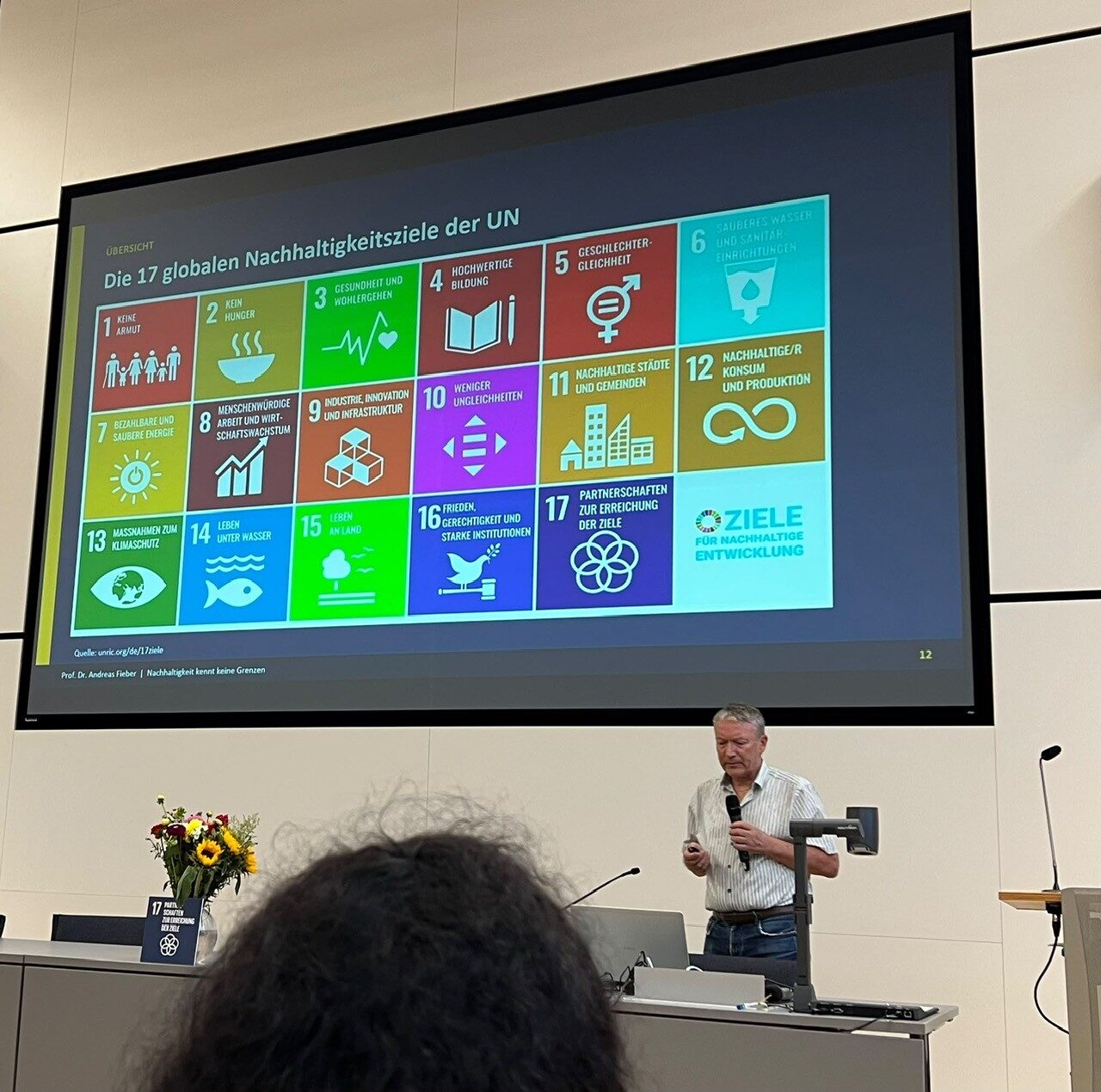
September 2026 — On September 17th 2026, the “Global Engagement Network Meeting” took place at the Landsberg am Lech District Administrator’s Office. The district’s Coordination Office for Municipal Development Policy had invited interested citizens as well as representatives from politics, business, and community organizations. The focus was on the United Nations’ 17 Sustainable Development Goals (SDGs) and the question of how these global goals can be implemented through concrete local projects.

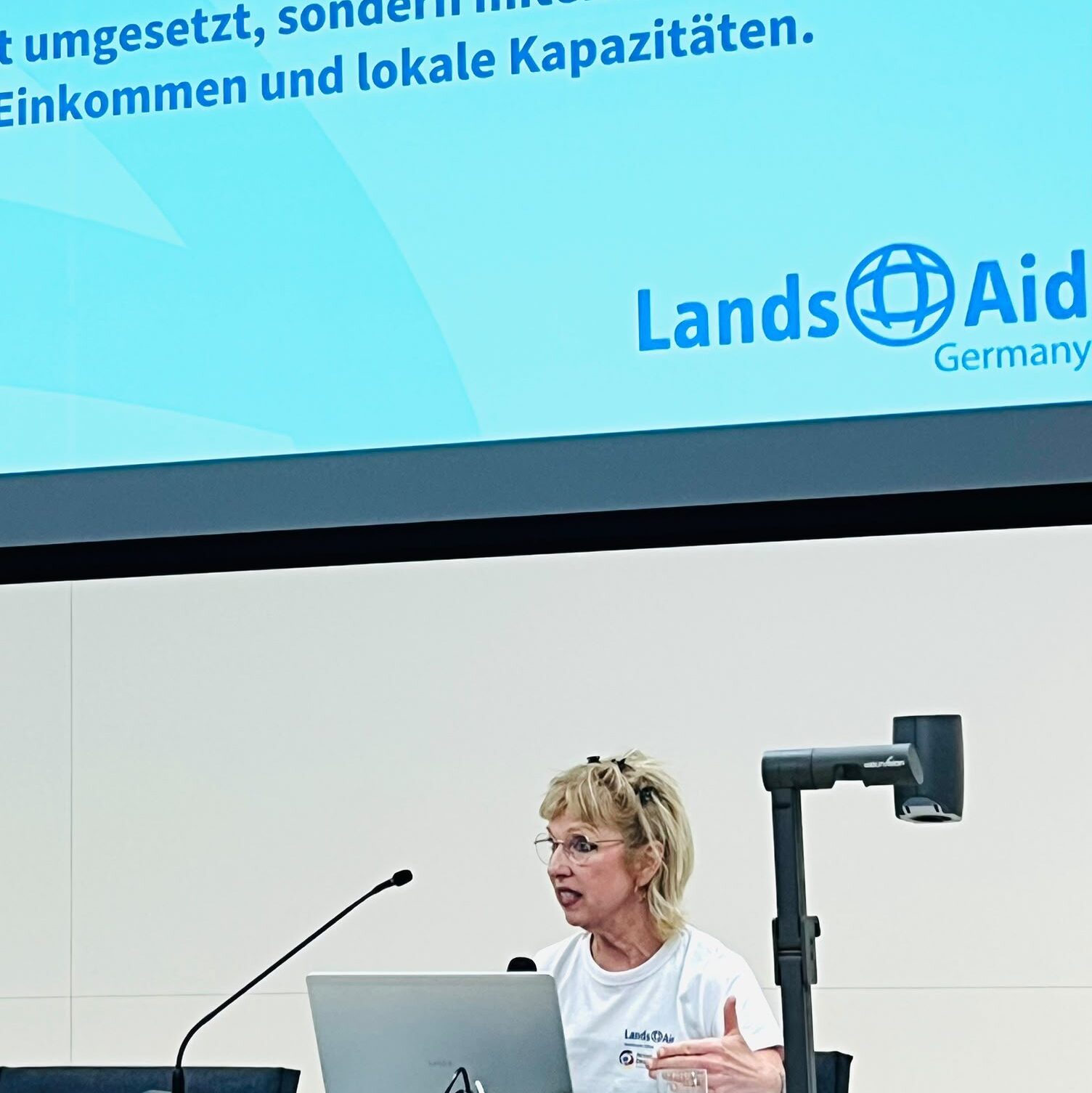
LandsAid was also represented at the meeting. Our press officer, Andrea Schmelzle, presented a project aimed at ensuring food security and empowering women in the Ihanga and Kiomvu regions of South Kivu, Democratic Republic of Congo. Using the project as an example, she demonstrated how a globally defined Sustainable Development Goal can be translated into concrete actions in a rural community.

To kick off the event, Professor Dr. Andreas Fieber spoke about the role of the European Union in implementing the 17 Sustainable Development Goals in the Global South. He is a professor of general business administration with a focus on finance and controlling at the Rosenheim University of Applied Sciences (TH Rosenheim) / Burghausen Campus, and his research focuses, among other things, on sustainability and the UN Sustainable Development Goals. The 17 SDGs were adopted in 2015 and are intended to be achieved by 2030 (Agenda 2030).

In his presentation, Dr. Fieber first outlined the development and significance of the SDGs and then examined their implementation in Cameroon, the Democratic Republic of Congo, and Tanzania. In doing so, he also highlighted the different starting points of the three countries. The Democratic Republic of Congo lags significantly behind in implementing the Sustainable Development Goals; there is a particularly urgent need for action in the fight against poverty (SDG 1).

Prof. Dr. Andreas Fieber also explained the various EU instruments for supporting the SDGs: financial assistance, investments, regulation of companies in the EU, as well as trade and partnerships.

Clémence Labrentz, founder and chairwoman of Wings for Africa e. V., then spoke about the organization’s work in Cameroon. The organization has established a vocational school near the capital, Yaoundé. There, young people can receive a quality education and gain practical skills.

Our press officer then provided insights into LandsAid’s work in the Democratic Republic of Congo. The focus was on the question: How does a global sustainability goal translate into concrete change in a rural community?

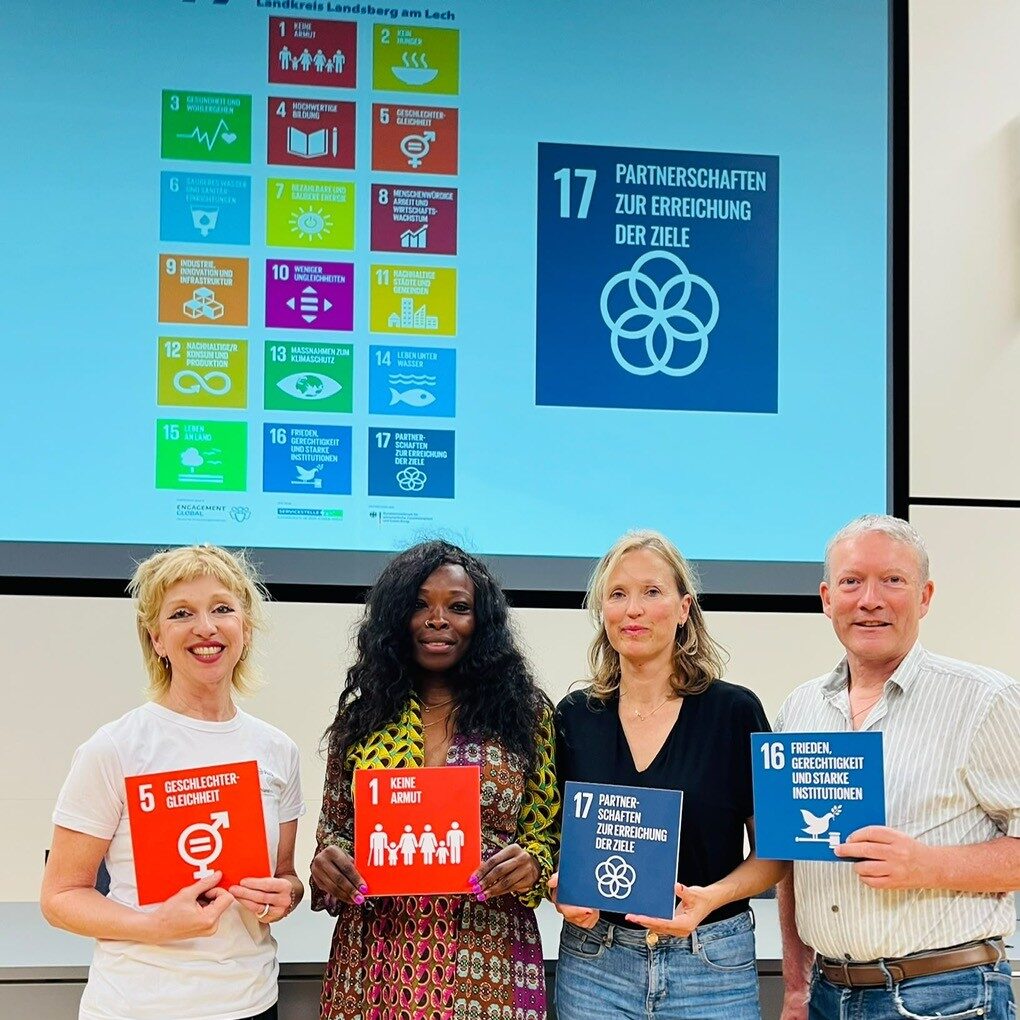
The project in Ihanga and Kiomvu brought together several areas. SDG 2—Zero Hunger—and SDG 5—Gender Equality—were particularly relevant. In this project, food security is closely linked to the empowerment of women: Women gained access to knowledge, income, and opportunities to participate in decision-making.

SDG 3—Good Health and Well-being—and SDG 17—Partnerships for Achievement of the Goals—also played an important role. The project therefore focused on several interconnected measures in the areas of health, nutrition, income, and local structures.

In closing, Miriam Anton from the Coordination Office for Municipal Development Policy presented the partnership between the Landsberg am Lech district and the Newala district in Tanzania. Both regions are working together to implement the 17 Sustainable Development Goals. The partnership aims to sustainably improve the living conditions of the people in Newala. Among other things, this involves combating poverty, improving education and health conditions, and strengthening social and cultural ties between the Landsberg am Lech district and the Newala district.

After the presentations, participants had the opportunity to test their knowledge in an SDG quiz organized by trainees from the District Administrator’s Office. The event then provided an opportunity for discussion and networking.

For LandsAid, the meeting was a great opportunity to present its project work using a concrete example and to demonstrate how international sustainability goals are translated into concrete actions on the ground in collaboration with local partners. Thank you very much!

Photos: Conny Kurz

Related articles
Your donation arrives

Our expenditure and income are regularly reviewed by the German Central Institute for Social Issues (DZI). It has regularly certified the proper use of donations since 2009, which is why we are entitled to bear the corresponding seal.

Schön, dass Sie helfen wollen!

Donate now

Bank
IBAN
BIC

Sparkasse Landsberg-Dießen
DE66 7005 2060 0000 014001
BYLADEM1LLD

By becoming a sponsoring member, you provide us with long-term support and enable us to plan projects sensibly over the longer term.

For cost reasons, we automatically send donation receipts for amounts over € 300 at the beginning of the following year (please be sure to include a full address in the purpose field). For amounts under € 300, it is sufficient to submit a bank statement to the tax office.

If you would still like a donation receipt immediately, please let us know so that we can send it to you.

Our partners

2026-10-22T18:03:11+00:00
Go to Top